Showing posts with label history. Show all posts

Tuesday, January 29, 2013

Birthdays


Once in a while I sit down here at my keyboard, prepared to post my latest inspirational story, and something moves me to change it up a little.  Mostly I enjoy the short stories of others to start my day in a positive way.  Through the search for the story and then the time to find a scripture that goes along with it, I find my day off in a good way.  I'm prepared to face the challenges and successes of the day!

The first thing that I do is to check my friends on Facebook.  I share birthday wishes and send messages to friends and family.  Then I begin work, for me. 

Today as I checked with my Facebook friends, several of my school mates had posted birthday wishes to the state of Kansas.  To quote an old advertisement, "Ahhh, Kansas!"  I spent the biggest part of my life in Kansas so it is home for me.  My parents, brothers and sister, aunts, uncles and cousins still live there and I don't live far away, just across the state line to the north. 

My friends in Nebraska shake their heads and grin at me when I talk about Kansas.  I can tell them about Kansas history because we studied it every year in preparation for the birthday of the state.  When I taught in public school, it was one of my favorite subjects to teach the children.  We would take the entire month of January to read, study and reenact the stories of how we came to be.  And on January 29 we would get on a bus and visit the capitol building in Topeka. I loved it and the kids I taught, many years ago, still remember what we learned as they tell me about those memories when we visit.

So, you ask, why is this Kansas history such a big deal?  Because it's MY history.  It's those events, those people that helped to create the me that I am today.  Think about it...all of those things came together to form each one of us at the right time.  My friends here in this area don't show those roots.  They talk a lot about their football team but mostly they don't talk about their history, unless they're an historian.  I don't see that sense of pride in their great state that you find in those of us from the state just south.

History is important, whether it's state history, country history, or your own personal history.  Examining the past explains the present and prepares the way for the future.  Hopefully, there are lessons learned and skills inherited. 

I was fortunate to be raised in a family where not only our history was important, but the state and country in which we lived were also important.  I look forward to my birthday every year, and I look forward to the state's birthday.  January 29, I will remind my friends today that today is Kansas' birthday.  It's a great place! 

Ahhhh, Kansas!!

“For inquire, please, of bygone ages, and consider what the fathers have searched out. For we are but of yesterday and know nothing, for our days on earth are a shadow. Will they not teach you and tell you and utter words out of their understanding?"
Job 8:8-10 ESV

Monday, August 20, 2012

Funny Grade School Exams


For all my teacher friends as they begin the new school year...

History Of The World According To American Grade School Student Exam Papers
  1. Ancient Egypt was inhabited by mummies and they all wrote in Hydraulics. They lived in the Sarah Dessert and travelled by Camelot. The climate of the Sarah is such that the inhabitants have to live elsewhere.
  2. Moses led the Hebrew slaves to the Red sea, where they made unleavened bread which is bread made without any ingrediants. Moses went up on Mount Cyanide to get the ten commandments. He died before he ever reached Canada.
  3. Solomon had three hundred wives and seven hundred porcupines.
  4. The Greeks were a highly sculptured people, and without them we wouldn’t have history. The Greeks also had Myths. A Myth is a female moth.
  5. Actually, Homer was not written by Homer but by another man of that name.
  6. Socrates was a famous Greek teacher who went around giving people advice. They killed him. Socrates died from an overdose of wedlock. After his death his career sufferred a dramatic decline.
  7. Eventually the Romans conquered the Greeks. History calls people Romans because they never stayed in one place for long.
  8. Julius Ceaser extinguished himself on the battlefields of Gaul. The ides of March murdered him because they thought he was going to be made King. Dying he gasped out: ‘Tee hee, Brutus’
  9. Joan of Arc was burnt to a steak and was canonized by Bernard Shaw. Finally Magna Carta provided that no man should be hanged twice for the same offense.
  10. Another story was William Tell who shot an arrow through an apple while standing on his sons head.
  11. Queen Elizabeth was the ‘Virgin Queen’. As a Queen she was a great success. When she exposed herself before her troops they all shouted ‘hurrah’.
  12. It was an age of great inventions and discoveries. Gutenberg invented removable type and the Bible. Another important invention was the circulation of the blood. Sir Walter Raleigh is a historical figure because he invented cigarettes and started smoking. And Sir Francis Drake circumsized the world with a 100 foot clipper.
  13. The greates writer of the Renaissance was William Shakespeare. He was born in the year 1564, supposedly on his birthday. He never made much money and is famous only because of his plays. He wrote tragedies, comedies, and hysterectomies, all in Islamic pentameter. Romeo and Juliet are an example of a heroic couplet. Romeo’s last wish was to be laid by Juliet.
  14. Writing at the same time as Shakespeare was Miguel Cervantes. He wrote Donkey Hote. The next great author was John Milton. Milton wrote paradise Lost. Then his wife died and he wrote Paradise Regained.
  15. One of the causes of the revolutionary war was the English put tacks in their tea. Also the colonists would send their parcels through the post without stamps. Finally the colnists won the war and no longer had to pay for taxis. Delegates from the original 13 states formed the contented congress. Thomas Jefferson, a virgin, and Benjamin Franklin were two singers of the declaration of independence. Franklin discovered electricity by rubbing two cats backwards and declared, ‘A horse divided against itself cannot stand’ Franklin died in 1790 and is still dead.
  16. Johann Bach wrote a great many musical compositions and had a large number of children. In between he practised on an old spinster which he kept up in his attic. Bach died from 1750 to the present. Bach was the most famous composer in the world and so was Handel. Handel was half German and half Italian and half English. He was very large.
  17. Beethoven wrote music even though he was deaf. He was so deaf he wrote loud music. He took long walks in the forest even when everyone was calling for him. Beethoven expired in 1827 and later died from this.
  18. The nineteenth century was a time of a great many thoughts and inventions. People stopped reproducing by hand and started reproducing by machine. The invention of the steam boat caused a network of rivers to spring up. Cyrus McCormick invented the McCormick raper, which did the work of a hundred men.
  19. Louis Paster discovered a cure for rabbis. Charles Darwin was a naturalist who wrote the organ of the species. Madman Curie discovered raio. And Karl Marx became one of the Mark Brothers.
  20. The first world war, caused by the assignation of the Arch-Duck by an anahist, ushered in a new error in the anals of human history.
Behold, children are a heritage from the LORD, the fruit of the womb a reward. Like arrows in the hand of a warrior are the children of one’s youth. Blessed is the man who fills his quiver with them! He shall not be put to shame when he speaks with his enemies in the gate.
Psalms 127:3-5

Wednesday, July 4, 2012

Lesser Known Truths About the Fourth of July


                                                  Indianapolis fireworks (Livescience)
 

A divided nation?  How very American of us.

As we commemorate the 236th anniversary of our Declaration of Independence, revisiting our history helps remind us how far we've come — and just what still makes up the American character. For one thing, not all the 18th-century colonialists were keen on this whole independence thing: A good half-million were Loyalists to the British crown, and hung on to their royal connections in places like New York City, Long Island, and northern Georgia through the 1780s.

Fourth of July myths and truths:

— King George III did not write on July 4, 1776: "Dear Diary, Nothing of importance happened today."

—Adams and Jefferson did die July 4, 1826, the Declaration's 50th anniversary. James Monroe died on July 4, 1831, and Calvin Coolidge was born July 4, 1872.

—Paperwork took a lot longer in those days: The Declaration's signing didn't begin until August 2 and finished sometime in November.

—No, Nicolas Cage didn't find a map on the back of the Declaration of Independence, because if he did, he could pay off his debts and go back to doing good movies. The only thing on the back of the parchment is "Original Declaration of Independence  ated 4th July 1776." There are, however, 26 copies (aka Dunlap broadsides) that do exist — all publicly owned saved one.

—Okay, if you really want a conspiracy coda, how's this: The Declaration's signatures are signed according to geography.

"John Hancock, the President of the Congress, was the first to sign the sheet of parchment measuring 24¼ by 29¾ inches. He used a bold signature centered below the text. In accordance with prevailing custom, the other delegates began to sign at the right below the text, their signatures arranged according to the geographic location of the states they represented. New Hampshire, the northernmost state, began the list, and Georgia, the southernmost, ended it." (National Archives)

An Exceprt from an Article By Vera H-C Chan | Yahoo! News 

"For you have been called to live in freedom, my brothers and sisters.
But don’t use your freedom to satisfy your sinful nature. Instead, use your freedom to serve one another in love."

Galatians 5:13 (NLT) 

Saturday, May 7, 2011

Thank You, Mom!

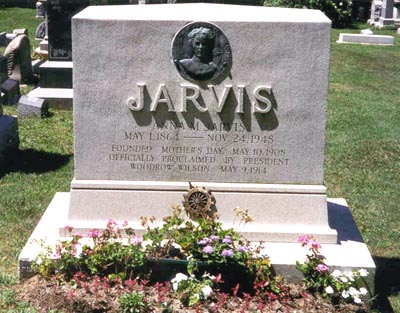
Tomorrow is Mother's Day.  Did you know that the woman who actually started the Mother's Day tradition regretted her actions?  Here's a little history:

After Anna Reeves Jarvis died, her daughter Anna M. Jarvis campaigned for the creation of an official Mother’s Day in remembrance of her mother and in honor of peace. In 1908, Anna petitioned the superintendent of the church where her Mother had spent over 20 years teaching Sunday School. Her request was honored, and on May 10, 1908, the first official Mother's Day celebration took place at Andrew's Methodist Church in Grafton, West Virginia and a church in Philadelphia, Pennsylvania. The West Virginia event drew a congregation of 407 and Anna Jarvis arranged for white carnations—her Mother’s favorite flower—to adorn the patrons. Two carnations were given to every Mother in attendance. Today, white carnations are used to honor deceased Mothers, while pink or red carnations pay tribute to Mothers who are still alive. Andrew's Methodist Church exists to this day, and was incorporated into the International Mother’s Day Shrine in 1962.

In 1908 a U.S. Senator from Nebraska, Elmer Burkett, proposed making Mother's Day a national holiday at the request of the Young Men's Christian Association (YMCA). The proposal was defeated, but by 1909 forty-six states were holding Mother's Day services as well as parts of Canada and Mexico.

Anna Jarvis quit working and devoted herself full time to the creation of Mother's Day, endlessly petitioning state governments, business leaders, women groups, churches and other institutions and organizations. She finally convinced the World's Sunday School Association to back her, a key influence over state legislators and congress. In 1912 West Virginia became the first state to officially recognize Mother's Day, and in 1914 Woodrow Wilson signed it into national observance, declaring the second Sunday in May as Mother's Day.

The Fight Over Commercialization

The holiday flourished in the United States and flowers, especially white carnations, became very popular. One business journal, Florists Review, went so far as to print, “This was a holiday that could be exploited.” But the budding commercialization of Mother's Day greatly disturbed Jarvis, so she vociferously opposed what she perceived as a misuse of the holiday. In 1923 she sued to stop a Mother’s Day event, and in the 1930's she was arrested for disturbing the peace at the American War Mothers group. She was protesting their sale of flowers. In the 1930’s Jarvis also petitioned against the postage stamp featuring her Mother, a vase of white carnations and the word “Mother’s Day.” Jarvis was able to have the words “Mother’s Day” removed. The flowers remained. In 1938, Time Magazine ran an article about Jarvis's fight to copyright Mother's Day, but by then it was already too late to change the commercial trend.

In opposition to the flower industry’s exploitation of the holiday, Jarvis wrote, “What will you do to route charlatans, bandits, pirates, racketeers, kidnappers and other termites that would undermine with their greed one of the finest, noblest and truest movements and celebrations?” Despite her efforts, flower sales on Mother's Day continued to grow. Florist's Review wrote, “Miss Jarvis was completely squelched.”
Anna Jarvis died in 1948, blind, poor and childless. Jarvis would never know that it was, ironically, The Florist's Exchange that had anonymously paid for her care. (Mother's Day Central)

Some friends asked me the other day if my son would do something to celebrate Mother's Day with me.  I told them that I had already received the best Mother's Day gift I could get.  One evening last week, I came home from work to find a beautiful pink cupcake sitting on the kitchen counter.  There was no card but underneath the cake was a little note in his handwriting that simply said, "Thanks Mom for everything."  I've already gotten my gift this year, no matter what he does or doesn't do on Sunday.

Happy Mother's Day!
Visit Anita Renfroe's video at http://www.youtube.com/watch?v=YYukEAmoMCQ.  It says it all.

Saturday, April 30, 2011

Party!!!

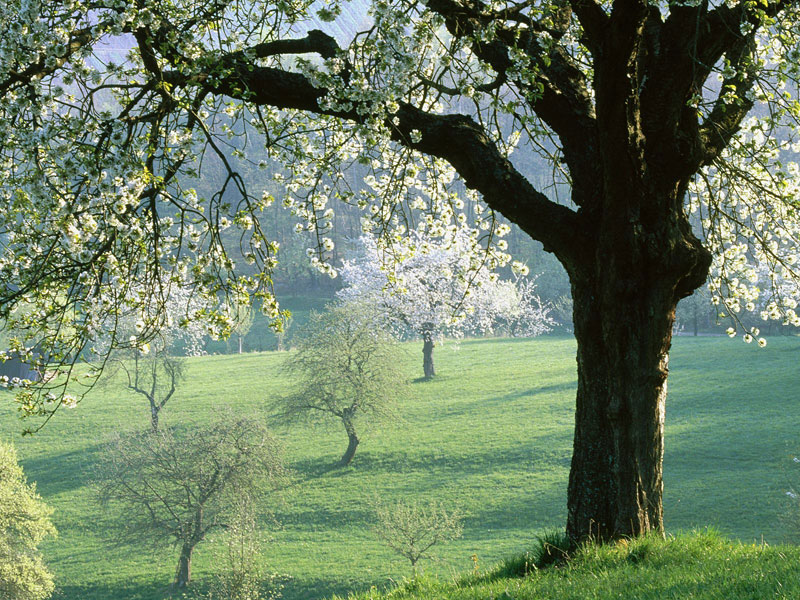
cherry tree


 This is the week for celebrations.  Will and Cate partied all night, Harry hosted a breakfast this morning at the palace for any survivors still standing after all the celebrations yesterday, and while not on the same scale as their parties, Nebraska City is holding its annual Arbor Day festivities.  This is my first year partaking of these events and as I look at the list in front of me, I think it might take several years before I can possible get to all of these activities.  And, my goodness, if I had started eating last night, I wouldn't be able to sample all of the wonderful assortment of foods before the weekend is over.  Last night was the chili cook-off.  This morning there was a breakfast to celebrate military families.  I see that there will be kettle corn and funnel cakes later as well as "parade snacks" (I'll definitely have to check that out if I am truly to get the ambiance of the parade).  Tonight at the Catholic Church there is the Spring Dinner.  Pancake feed in the morning and it looks like every place advertising an activity has food involved.  Wow!  You could really pack on some pounds this weekend!

This is the 139th Annual Arbor Day Celebration.  Very impressive!  Of course, Arbor Day was yesterday but the activities actually began on Thursday evening with a concert.  And what would Arbor Day be without trees, so there are tree plantings scheduled throughout the weekend, free trees given away, as well as planting and nurturing tips. 

What exactly is Arbor Day all about, you ask?  Well, we all know it's about trees but here's a little more:  Arbor Day was the idea of J. Sterling Morton.  Mr. Morton was raised in Detroit and graduated from the University of Michigan.  After receiving his diploma in 1854, he moved with his bride, Caroline Joy French, to Nebraska, which was not yet organized as a territory, and staked a claim in Nebraska City. Soon after arriving at Nebraska City, Morton became the editor of the local newspaper, the Nebraska City News. He used this platform to promote his ideas about agriculture and nature.  Morton served in the Nebraska Territorial House of Representatives in 1855-1856. He was then appointed Secretary of the Nebraska Territory by President James Buchanan on July 12, 1858, which he served as until 1861. He also served as Acting Governor from December 5, 1858, to May 2, 1859.

Respected as an agriculturalist, Morton sought to instruct people in the modern techniques of farming and forestry. Among his most significant achievements was the founding of Arbor Day. He became well known in Nebraska for his political, agricultural, and literary activities and from there was appointed as Secretary of Agriculture by President Cleveland. He is credited with helping change that department into a coordinated service to farmers, and he supported Cleveland in setting up national forest reservations. (Wikipedia)

We have the good fortune, here in Nebraska City, to have been the beneficiaries of his good stewardship.  There are trees of all kinds here and they are beautiful!  Nebraska City sits right on the confluence of the Platte and Missouri Rivers.  The main street of town takes you directly to the river where the barges still bring corn and other crops up and downstream to the larger cities.  We are built into the hills and from my office I can look down the main street to the river and the bluffs beyond which are Iowa.   Mr. Morton left a wonderful legacy.  His home, expanded by his son, Joy Morton-owner of Morton Salt, is a beautiful, historical place surrounded by trees, flowers and nature.  It sits at the west edge of town.  The Lied Lodge and Conference Center brings people from around the world to our little town to learn about agriculture and, especially, trees,  and Arbor Tree Farm provides all manner of educational opportunities for people of all ages to come and learn about trees.  And, of course, everyone goes home with a tree.

In this age of tearing down the old to make way for the new, I am enjoying this little slice of history.  On my walk, shortly after I moved to town, I decided to visit the historical landmarks at the local cemetery.  I was fascinated with the markers there.  Of course, J. Sterling Morton's family plot was bordered by stone cut to look like logs and his marker is an 8 foot stone tree stump with his and his family's names carved all around it.  All throughout the cemetery are markers similar to his for people who are recognized for their efforts to plant and grow trees. 

Our landscape is looking much different these days.  When I first moved here it was October and the leaves were falling.  Within a few short weeks, the trees were bare and I had some of the most spectacular sunsets I've ever seen from my deck through the bare trees.  Today, as I look out, the trees are red, violet, green, yellow, white, and brown.  It is lovely to look out any window in my home.  The air is clean and the skies are blue thanks to the work of Mr. Morton and his associates.

Thank you, Mr. Morton!  Let's go party!